
BACKROOMS: PRIMAL







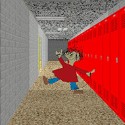


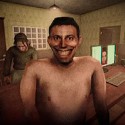
You come to on cold industrial carpet with the fluorescent hum of identical rooms pressing into your skull, and the first thing you register is that Stracy is still beside you — which means neither of you is alone in BACKROOMS: PRIMAL, and neither of you is safe. The walls stretch the same jaundiced yellow in every direction, and somewhere past the next doorway something that should never have been kept in a black-site like this one is already awake.
| Genre | Survival Horror |
|---|---|
| Setting | An unstable, infinite complex known as the Backrooms |
| Core Threat | Hybrid prehistoric predators |
| Objective | Scavenge key artifacts and reach the extraction point |
Why Stracy Changes How BACKROOMS: PRIMAL Plays
The premise sounds simple at first: you and Stracy wake up together inside a facility built to secretly contain prehistoric specimens and unidentified hybrid monstrosities, and containment has already failed. That shared starting point matters, because the game never treats this as a solo descent — her presence changes the tone of every early decision, from which doorway you risk first to how much you're willing to backtrack once a hallway stops feeling right.
Veterans of the wider Backrooms genre will recognize the shifting-room setup immediately, but this game adds something that setup usually doesn't have to deal with: predators that actively hunt rather than wander. That single addition reframes the familiar yellow-hallway dread into something closer to a chase.
Players who come in expecting a quiet exploration game tend to be the ones most unsettled by how quickly BACKROOMS: PRIMAL escalates — the calm of the first few rooms is deliberately not representative of what the rest of the run demands.
Reading an Unstable Complex Before It Reads You
Walls, floors, and doorways in the complex destabilize without warning, and touching a corrupted surface risks a catastrophic glitch that throws you beyond the marked sectors entirely. Staying inside those marked boundaries isn't a suggestion — it's the only thing separating a bad room from an unrecoverable one.
- Floors and doorways that stop lining up with the room they're attached to
- Marked sectors that exist specifically because the unmarked ground around them isn't safe to cross
- The locked security areas standing between you and whatever artifact you actually need
Completionist-minded players tend to push into every locked sector before moving on, while players focused purely on reaching the extraction point will bypass whatever isn't directly blocking their path — both approaches work, but they produce very different runs through the same complex.
Scavenging in BACKROOMS: PRIMAL Without Getting Cornered
Artifacts are scattered through sectors that are, by design, also where the hybrid predators spend most of their time, so scavenging is never a safe errand you can do on autopilot. Every artifact run is really a bet that you can get in, grab what you need, and get back out before something closes the distance.
Co-op-minded pairs often fall into a rhythm where one person calls out predator positions while the other commits to the grab, which turns scavenging into a shared risk instead of an individual one.
The game currently holds a 4.5-out-of-5 average across its 32 ratings, and the one thing that reaction seems split on is the dinosaur-in-the-Backrooms premise itself — some players treat the hybrid monstrosities as a fresh twist on an overfamiliar setting, others feel the mashup pushes the concept a step further than it needed to go.
What Hunts You Through the Carpeted Halls
The hybrid apex predators don't patrol politely. Once one picks up on you, the halls stop being a maze to solve and start being a straight line between you and the nearest extraction point, and every corner you cut to get there is a corner you might run straight into something else.
There's a specific dread to hearing movement behind a wall you can't see through, not knowing whether it's tracking you or simply passing by — that uncertainty is doing as much work as the predators themselves.
Early in a run, before you've learned which doorways to trust, that uncertainty is at its worst; later, once you've mapped a route to an extraction point, the fear shifts from wondering where it is to wondering if you can outrun it.
- Is BACKROOMS: PRIMAL connected to the wider internet Backrooms lore? It borrows the core premise of an infinite, shifting yellow complex, but frames it specifically as a black-site built to contain prehistoric and hybrid specimens, which is its own addition rather than a retelling of older Backrooms stories.
- Can you play BACKROOMS: PRIMAL solo? Yes — Stracy is part of the story from the first room, but the moment-to-moment survival of scavenging, avoiding corrupted surfaces, and reaching the extraction point still falls on you.
- What's the actual goal in a run of BACKROOMS: PRIMAL? Scavenge the artifacts you need, bypass or avoid the locked security sectors in your way, and reach an extraction point before the hybrid predators close in.
BACKROOMS: PRIMAL earns its tension less from the dinosaurs than from the complex itself refusing to stay still — every hallway you cleared minutes ago is a hallway you can no longer trust, and Stracy's voice beside you is the only constant until an extraction point finally comes into view.