
That's Not My Mom 2


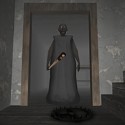



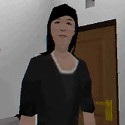
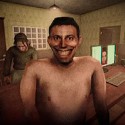
You walk through the front door after school, and the first thing you do — before you've even set down your bag — is check whether the living room looks the way it did yesterday. That routine, repeated day after day, is the entire premise of That's Not My Mom 2, and it's a lot more unsettling than it sounds once the house stops cooperating.
| Genre | First-person anomaly-finding horror |
|---|---|
| Platform | Windows PC |
| Core mechanic | Compare the house against memory, flag what's changed |
| Session length | A few minutes per visit, repeated across the full sequence |
| Setting | A single family house, revisited daily |
| Structure | More than twenty numbered school-day visits, ending in a final encounter |
A House You're Expected to Memorize
The first day of That's Not My Mom 2 doesn't throw anything frightening at you. It exists purely so you can walk the house, room by room, and build a mental map of where everything belongs — the chairs, the paintings, a vase, the pillows on the couch, a plant by the window. Nothing about that first visit is dangerous, but skipping it or rushing through it is the single biggest mistake a new player can make.
Every visit after that first one is judged against the picture you built during it. The game never hands you a checklist of what to look for; it simply trusts that you were paying attention, which is a harder ask than it sounds once a dozen small details start competing for your memory at once.
Early in the game, the changes stay small and easy to miss on purpose — a missing frame, a duplicated chair — training you to slow down before the later days start asking more of you.
The Mother Is the Biggest Variable
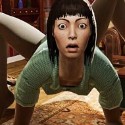
Most anomalies in the house are static: an object moved, duplicated, or gone. The mother is the one element that actively behaves differently from visit to visit. She might stay seated exactly where she always sits, she might not be visible at all, she might follow the boy from room to room, or — on the days that genuinely rattle players — she can appear as a deformed entity that looks almost, but not quite, like her.
By the time a player reaches that version of her for the first time, they've usually already spent several days training themselves to treat her as part of the environment to check rather than a character to interact with, which is exactly what makes the deformed entity land as hard as it does.
Reading the House Like a Checklist
Players who do well tend to settle into a fixed route rather than wandering: start at the entrance, move through each room in a consistent order, and check the mother last. Comparing quantities matters just as much as comparing appearance, since several anomalies in That's Not My Mom 2 involve an object quietly duplicating rather than changing outright.
- Enter through the same door every time and work the rooms in the same order.
- Count recurring objects — chairs, frames, plants — rather than only glancing at them.
- Check the mother last, once the rest of the house has already been confirmed normal or flagged.
- Treat anything unusually large, duplicated, or simply absent as worth a second look.
That consistency is what most beginners get wrong. A player who checks rooms in a different order each visit is far more likely to miss something, since half the skill here is noticing a change relative to a routine, not just noticing that something looks odd in isolation.
When Observation Turns Into Survival
For a good stretch of the game, correctly spotting an anomaly is the entire challenge. That changes once the later days introduce active threats, where recognizing the danger is only the first step — the second is getting out. During these pursuit sequences, knowing the house's layout from memory matters more than anything you've flagged correctly, since the fastest route to an exit is rarely the one you'd take if you stopped to think about it.
This is where the daily structure of That's Not My Mom 2 pays off in a different way: players who treated the early days as a memorization exercise have a real advantage once the house stops being safe to walk through slowly.
Where Players Disagree About That's Not My Mom 2
Reception to That's Not My Mom 2 has been genuinely mixed rather than uniformly positive, and the split tends to fall along one specific line: some players enjoy the slow, repeated dread of returning to the same rooms more than twenty times, while others find the anomaly types familiar from similar games and feel the format wears thin well before the final days. Both reactions show up regularly in discussion, and neither is really unfair — the format is deliberately repetitive, and whether that repetition builds tension or just becomes routine seems to depend heavily on the individual player.
How It Fits Among Similar Games
Players familiar with other anomaly-spotting titles will recognize the comparison-based structure immediately, and the game doesn't hide that lineage. What sets the format apart here is the mother herself — most anomaly games change an environment; comparatively few build an entire mechanic around a character whose behavior and appearance are themselves the thing you're watching.
How Do You Get to the Ending?
Reaching the ending requires completing the full daily sequence rather than any single day — you need to make the correct observation on each required visit and survive the days where the anomaly becomes actively dangerous. There's no shortcut past the sequence; skipping ahead isn't an option the game offers.
What Happens if You Get an Anomaly Wrong?
Misreading a day doesn't always end the run immediately — on early days it mostly costs you information you'll need later — but on the days built around active threats, missing the correct read can trigger a pursuit you need to escape on foot, using the exits and corridors you've already learned from earlier visits.
Is That's Not My Mom 2 Based on Another Game?
The anomaly-hunting format draws visible inspiration from other observation-based horror titles, most notably the genre popularized by games built around spotting changes in a fixed loop. That's Not My Mom 2 takes the same core idea and applies it specifically to a family house and a mother whose behavior is never quite guaranteed from one visit to the next.
What makes That's Not My Mom 2 stick with players isn't any single scare — it's the way an ordinary chair or a familiar vase stops being background furniture and starts being something you have to actively verify, every single time you walk back through that front door.