
Big Shot Boxing
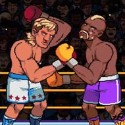






Big Shot Boxing looks like a quick arcade punch-up, the kind of game where tapping fast wins fights. It plays like a stat-management career sim where the actual punching is almost secondary to how carefully you have built your fighter's Power, Chin, Health, and Recovery long before the bell even rings.
| Genre | Boxing career simulation |
|---|---|
| Starting Roster | 20 selectable fighters |
| Core Stats | Power, Chin, Health, Recovery |
| Win Conditions | Points decision or knockout |
Training the Four Stats That Decide Fights
Every fighter is built around four numbers, and new players who skip straight to the ring without touching training tend to lose fights they should have won on pure stats alone.
Power decides how much damage every punch lands, and raising it first is the fastest way to start winning fights by knockout against early, less-skilled opponents. Chin determines how much punishment the fighter can absorb before going down, which matters once opponents start hitting back harder than the early roster does. Health is the bar that depletes across a fight, and Recovery controls how quickly it refills between rounds and between fights on the career calendar.
Spending every point on Power alone works for a while, but fighters who neglect Chin and Recovery tend to stall out against mid-tier opponents who can take a punch and still outlast them.
Jabs, Crosses, and Uppercuts in Big Shot Boxing
The punch set is simple on its face: jabs, crosses, and uppercuts, each with a different speed and payoff. Jabs land fast and keep an opponent's guard occupied without doing much damage on their own.
Crosses hit harder and open the door for combinations, chaining two or three punches together to stun an opponent rather than just chipping away at their health bar one punch at a time.
Uppercuts are the highest-risk, highest-reward option. Landing one clean against a staggered opponent is one of the more reliable routes to a knockout, which answers the question of how to actually finish tougher fighters once Power alone stops being enough: stun them with a combination first, then land the uppercut.
Climbing the Ranks in Big Shot Boxing's Career Mode
Career mode runs on a simple loop: fight, earn money, spend it on training, fight again. Early opponents are forgiving enough that an under-trained fighter can still win on points, but ranked fights further up the ladder punish anyone who has not kept all four stats moving together.
Choosing between a journeyman fight and a title challenge matters more than it first appears. Journeymen pay less but carry almost no risk of a loss ending a title shot, while challenging for a belt too early against an opponent with a far higher Chin stat usually ends in a decision loss instead of the win a player was hoping for.
Money earned from each fight funds the next round of training, which means a loss early in a career can compound, since less prize money means slower stat growth going into the next scheduled fight.
Debut to Retirement: Managing a Full Career
The career spans from a fighter's first professional bout through retirement, and Recovery becomes more important the longer that career runs. A fighter with weak Recovery heals slowly between fights, which can force choices between taking a scheduled bout under-healed or delaying it and losing out on ranking progress.
Later-career opponents hit with enough Power that a fighter who never invested in Chin starts getting knocked down in rounds they used to win comfortably. The stat gap between an early-career roster and a late-career one is large enough that old training habits stop working.
Retirement itself is less a failure state than a natural endpoint, closing out a career built fight by fight rather than ending abruptly the way a single knockout loss might suggest.
Big Shot Boxing rewards patience with its training menu as much as it rewards good timing in the ring, and the fighters who last from debut to retirement are usually the ones who treated Power, Chin, Health, and Recovery as four pieces of the same puzzle instead of chasing knockouts on Power alone.